Product Description
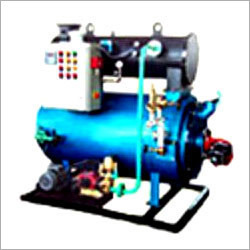
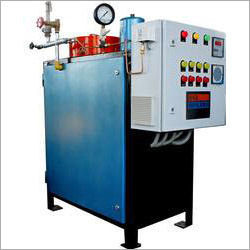
We hold immense expertise in this domain, which helps us to offer Horizontal Steam Boilers. Our firm is backed by a team of well-trained employees, who manufacture these boilers utilizing optimum-quality metals and other basic raw materials. To suit the demands of customers, these boilers are delivered at the end of our clients in variegated sizes and dimensions. Some of the special features of the offered Horizontal Steam Boilers are listed as follows:
- User-friendly operations
- Low maintenance
- Prolonged functional life
- Robust construction
Specification
| Country of Origin | Made in India |
| Automation Grade | Automatic |
| Capacity | 100-5000 kg/hr |
| Condition | New |
| Efficiency | 74 % (+-2%) on NCV |
| Fuel Type | Oil & Gas Fired |
| IBR Approved | Yes |
| Material | Mild Steel |
| Phase | 3 Phase |
| Voltage | 415V |
| Working Pressure | 5-22 Kg/cm2(g) |
Our Horizontal Steam Boilers incorporate safety valves, high-density glass wool insulation, and a compliant chimney to meet stringent industrial safety standards. The mild steel construction ensures durability, while digital or manual control panels allow for flexible operation modes as per user preference.
High Efficiency & Versatile Fuel OptionsAchieving heat efficiencies up to 88%, these boilers are compatible with oil, wood, or coal fuel, allowing businesses to select the most economical option. The fuel type, paired with optimal design, ensures effective steam generation at high temperatures up to 180C, matching the operational needs of diverse industries.
Customizable Capacities and DimensionsAvailable in various capacities, ranging from 300 kg/hr to 3,000 kg/hr, our boilers are tailored to specific output requirements. Dimensions can be customized based on client needs, ensuring seamless integration into existing facilities for industrial, food processing, textile, pharmaceutical, and chemical use.
FAQs of Horizontal Steam Boilers:
Q: How is the water level monitored and maintained in these horizontal steam boilers?
A: Each boiler is equipped with an integrated water level indicator to provide real-time monitoring. Maintenance of water levels is managed via manual or automated controls, ensuring consistent steam generation and safe operation.
Q: What is the process for installing and commissioning the horizontal steam boiler?
A: Installation involves site preparation, proper mounting of the horizontal boiler, connection to the required fuel supply (oil, wood, or coal), and linking the digital or manual control panel. Commissioning is completed by certified technicians to guarantee all safety and operational standards are met.
Q: When is it recommended to perform blow-down operations, and what purpose does it serve?
A: Blow-down operations should be performed at regular intervals, as recommended in the manual, to remove accumulated sediments and maintain optimal boiler performance. This process extends the boilers service life and upholds efficiency.
Q: Where can these boilers be utilized, considering their specifications?
A: These horizontal steam boilers are suitable for a wide range of sectors, such as industrial production, food processing plants, textile mills, pharmaceutical processing units, and chemical manufacturing facilities, all benefiting from their high-pressure steam output.
Q: What benefits do digital and manual control panels offer to operators?
A: Digital control panels provide enhanced monitoring and automation, while manual options give operators hands-on control for adjustment as needed. Both types ensure user-friendly operation and contribute to reliable steam production.
Q: How does the insulation improve boiler efficiency and safety?
A: The high-density glass wool insulation minimizes heat loss, contributing to fuel efficiency and energy savings. Additionally, it safeguards operators and surroundings by maintaining surface temperatures within safe limits during operation.
Q: What are the advantages of choosing a semi-automatic or automatic horizontal steam boiler for industrial use?
A: Both automation grades increase operational efficiency and safety. Semi-automatic models suit scenarios requiring occasional manual intervention, while automatic versions are ideal for continuous, hassle-free operation in high-demand environments.







 English
 Spanish
 French
 German
 Italian
 Chinese (Simplified)
 Japanese
 Korean
 Arabic
 Portuguese


 Send Inquiry
